Embroidered Patches Versus Stitching for Workwear
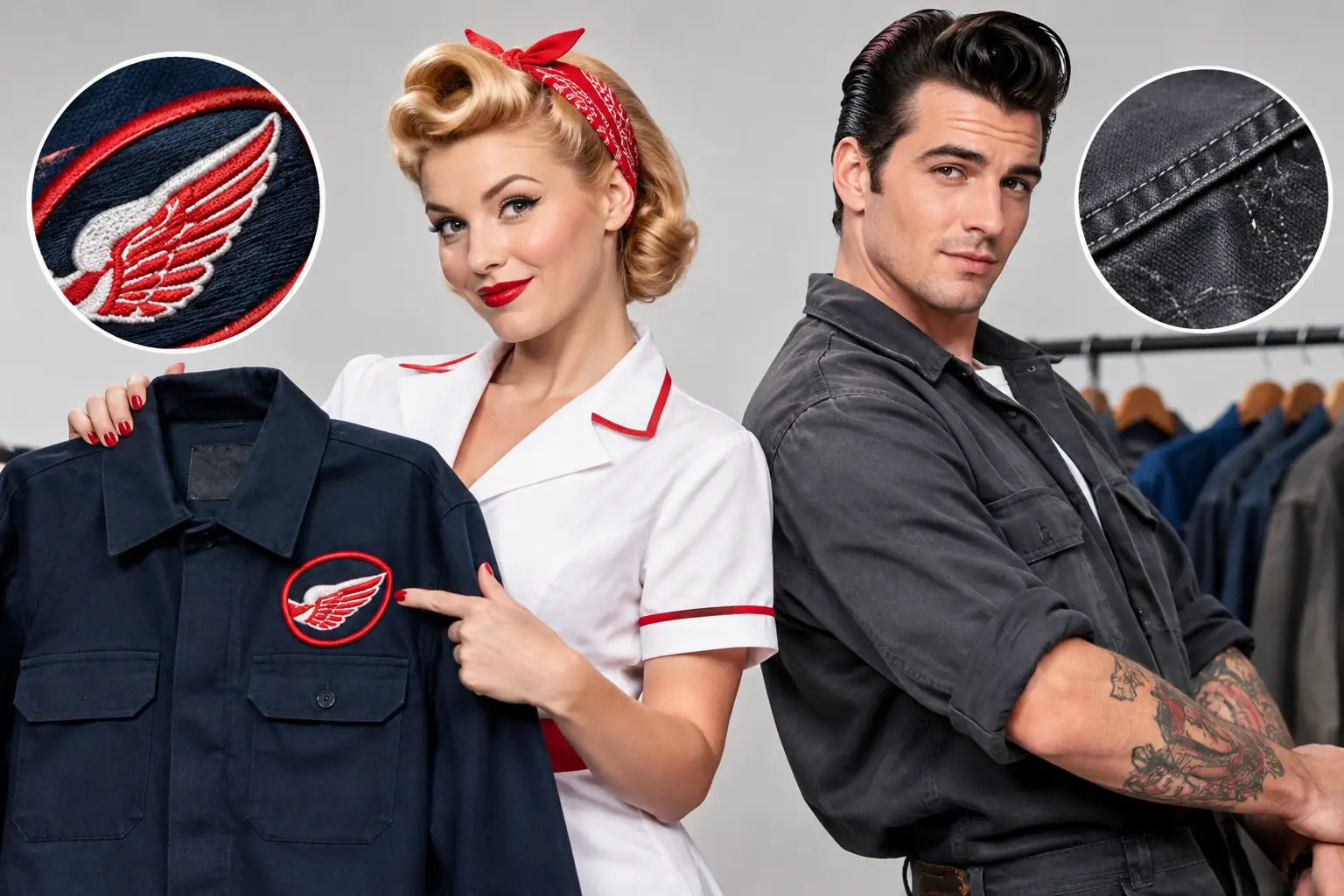
Compare embroidered patches versus stitching for uniforms, jackets, and polos. Choose the finish that supports your logo, garment, budget, and team well.
A jacket can carry the same logo two very different ways, and the difference shows up before anyone reads the name badge. In the question of embroidered patches versus stitching, the real decision is not whether one option looks more professional. Both can. It is about how the logo needs to perform on the garment, how often that garment will be worn, and the standard your team wants to present.
For a dental office, EMS unit, barn team, or service business, branded apparel is part uniform and part first impression. A well-chosen decoration method keeps the team looking consistent through busy shifts, repeat washes, and the occasional coffee-and-clipboard incident. The right choice depends on the artwork, garment, placement, and purpose.
What Direct Embroidery Means
Direct embroidery is exactly what it sounds like: thread is stitched directly into the garment. Your logo, name, credentials, or department is digitized into a stitch file, then embroidered onto the polo, jacket, vest, hat, or uniform piece itself.
This finish has a clean, integrated appearance. On a performance polo or soft-shell jacket, direct embroidery can look especially polished because it follows the garment rather than sitting on top of it. It is a strong choice for smaller logos, staff names, credentials, and simple department identifiers. Think a clinic logo over the left chest, a veterinary practice name on a vest, or an RN credential beneath a name.
Direct embroidery also holds up well under normal care. The thread becomes part of the garment, so there is no patch edge to catch or lift. For teams ordering a coordinated set of professional apparel, it often delivers the most traditional uniform look.
There are limits. Dense stitching can make a lightweight garment pucker, particularly when a logo is large or packed with solid fill areas. Fine print, tiny design details, and color gradients do not always translate well into thread. A skilled embroidery setup can solve much of that, but not every logo should be forced into a dense chest-sized stitch-out.
Embroidered Patches Versus Stitching: The Visual Difference
An embroidered patch is made separately, then attached to the garment. It may be sewn on, heat applied, or secured with another method suited to the patch and fabric. The logo is still rendered in thread, but the patch has its own backing and border, creating a defined shape on top of the garment.
That border is part of the appeal. Patches bring dimension and a classic insignia feel that works beautifully for outerwear, work jackets, structured hats, equestrian pieces, and organizations with a strong emblem. A fire-rescue-style shield, a barn crest, or a school mascot can look intentional and substantial as a patch.
Direct stitching is usually more understated. The design appears to belong to the garment from the start, with no separate edge around it. That makes it an easy fit for offices, medical practices, hospitality teams, and corporate uniforms where a refined, low-profile result matters.
Neither approach is automatically more premium. A crisp direct embroidery job on a quality polo reads as professional. So does a carefully made patch on a substantial jacket. Premium comes from matching the method to the garment and artwork, then executing it with care.
Choose Based on the Logo First
Before choosing a jacket color or thread shade, look hard at the logo. This is where many apparel projects are won or lost.
Simple logos with clear shapes, limited colors, and readable lettering are excellent candidates for direct embroidery. A practice name paired with a small icon, for example, can look sharp over the left chest without becoming stiff or overly heavy.
Patches can be a better fit when the design needs a strong outer shape, such as a shield, circle, oval, or badge. They also work well when the artwork is intended to feel like an emblem instead of a standard logo. A patch gives the design visual separation from the garment, which can help a detailed crest stand out on fleece, denim, or heavier outerwear.
Small text deserves special attention either way. Thread has physical limits. If a logo includes a website, a lengthy tagline, or tiny lines of copy, simplifying the art for apparel will usually produce a better result than trying to stitch every character. The goal is recognition at a glance, not a miniature business card on a sleeve.
Consider the Garment and the Job It Has to Do
The garment often makes the decision easier. Direct embroidery is a natural fit for polos, button-downs, quarter-zips, scrub jackets, and lighter vests. These pieces are commonly worn indoors or during client-facing work, where a smooth, polished finish supports a cohesive uniform.
Patches are particularly effective on durable outerwear. Think work jackets, heavy vests, canvas bags, structured caps, or pieces that need a distinct team identity from across a parking lot, arena, or job site. They can also be useful when the same patch will appear across several garment types, giving a team a consistent insignia even when some staff wear jackets and others wear bags or hats.
Fabric matters, too. Stretchy performance fabrics can react poorly to large, dense direct embroidery. The stitches may restrict the fabric or create a ripple around the logo. A properly selected patch may reduce that issue, although the attachment method still needs to be appropriate for the material. On the other hand, a patch can feel too rigid on a thin, drapey garment. The garment should still move the way it was designed to move.
Durability, Care, and Replacement
For everyday professional wear, direct embroidery is hard to beat. It is securely integrated into the garment and handles routine laundering well when care instructions are followed. There is less concern about an edge peeling or a patch catching on equipment.
Patches are durable, but their longevity depends heavily on how they are attached and where they are placed. A sewn patch on a sturdy jacket can handle serious use. A heat-applied patch on the wrong fabric or in a high-friction area may have a shorter life. That does not make patches a poor option. It simply means the application method needs to suit the assignment.
One advantage of patches is replacement. If an organization updates an employee's role, adds a specialty designation, or needs to refresh an outerwear program, a patch can sometimes be removed and replaced more easily than direct embroidery. This is useful for certain uniforms, though it is not a reason to choose patches by default.
Cost Is More Than the Price Per Piece
Direct embroidery and patches each have setup considerations. Direct embroidery generally requires digitizing the logo into a stitch file. Once that is done, repeated runs of the same design can be straightforward, especially for standard left-chest placement.
Patches may require their own design setup and production run before they are attached to garments. For a one-off item, that added step may not be the most efficient choice. For a larger program using the same emblem across jackets, bags, caps, and other gear, it can make sense because the patch becomes a consistent component of the collection.
The smarter budget question is not simply, “Which is cheaper?” Ask which method will look right after a full season of wear. A lower initial price is not much of a win if the logo is too small to read, the garment puckers, or the decoration feels out of place. For professional apparel, the finished impression has value.
When a Mixed Approach Makes Sense
You do not always have to choose one method for every detail. A polished combination can work well: direct embroidery for employee names and credentials, paired with a patch for a larger department emblem or specialty insignia. This is especially practical for teams that want their core logo to stay consistent while individual roles change.
Placement can also guide the mix. A left-chest embroidered logo may suit a polo or office jacket, while a sleeve patch adds visual identity to outerwear without overwhelming the front. The best arrangements look deliberate, not like every available space needed to be filled.
At Corazón De Oro Apparel, the standard is to treat custom embroidery as part of the garment's job, not an afterthought. The right apparel, artwork scale, placement, and thread treatment should work together before the first piece is produced.
A good rule is simple: choose direct embroidery when you want a refined, built-in uniform finish, and choose an embroidered patch when the design should wear like an insignia. Bring the logo, the garment, and the workday into the same decision. Your team will feel the difference every time they put it on.