Custom Work Jackets That Look Ready for Work
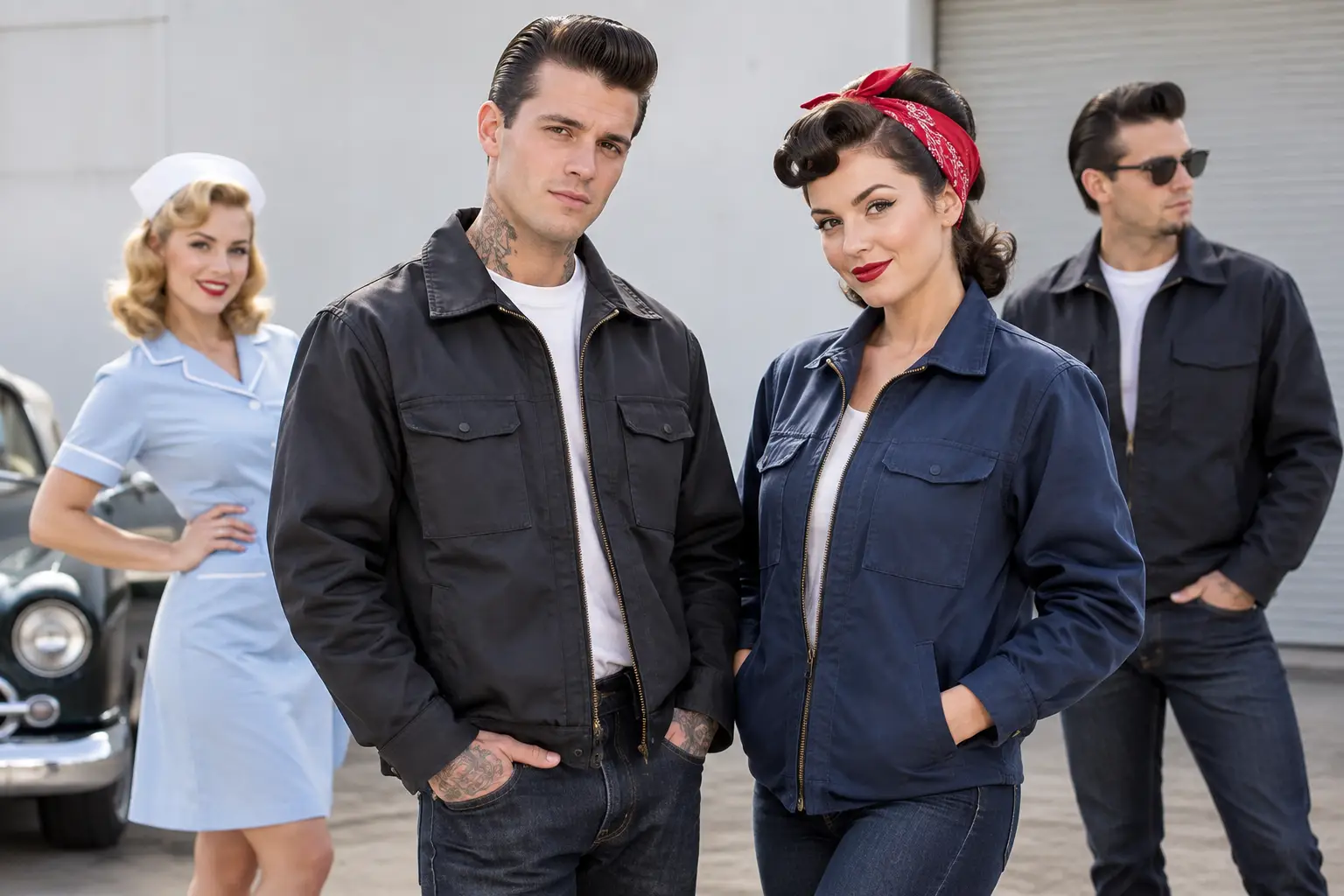
Custom work jackets give teams a polished, durable layer. Learn how to choose fabrics, fit, embroidery, and details that wear well through every long shift.
A jacket does more than take the edge off a cold morning. In a clinic, barn, job site, school office, or service call, it is often the first part of a uniform a client sees. Custom work jackets turn that practical outer layer into a clear signal of professionalism: the team is prepared, identifiable, and proud to represent its work.
The best choices do not chase novelty. They start with the demands of the job, then add custom embroidery that remains sharp after repeated wear. A well-chosen jacket should feel useful enough for the daily rotation and polished enough for the front desk, client meeting, or group photo.
Start With the Work, Not the Logo
Before choosing a garment color or embroidery placement, consider where and how the jacket will be worn. A dental practice may need a clean, lightweight layer for a climate-controlled office. An EMS crew or field-service team may need warmth, mobility, and a fabric that can stand up to frequent washing. An equestrian barn may need a jacket that handles early mornings, dust, and changing weather without looking casual.
That distinction matters because there is no single best jacket for every organization. A heavyweight insulated style can be excellent outdoors and frustrating indoors. A sleek soft shell looks polished and moves well, but may not provide enough warmth for teams who spend long hours outside. Lightweight full-zip jackets are often the most versatile choice for healthcare offices, schools, and corporate teams because staff can layer them as needed.
For professional orders, think about the jacket as part of a uniform system. Does it need to coordinate with scrubs, polos, work pants, or existing brand colors? Will staff wear it at a reception desk, in patient-facing spaces, during travel, or all of the above? Answering those questions early prevents a jacket order from becoming a closet full of pieces that look good on a hanger but rarely get worn.
Choosing Custom Work Jackets by Fabric and Function
Fabric is where appearance meets real-world performance. Fleece provides warmth and a familiar, comfortable feel. It works well for teams moving between buildings, outdoor events, and cool offices, though it may be too warm for active indoor roles. Soft shells offer a more structured, modern profile with stretch and light weather resistance, making them a strong option for field teams, equestrian groups, and client-facing service professionals.
For a lighter layer, performance knits and full-zip styles can give staff flexibility without adding bulk. These are especially useful when the jacket will be worn under a heavier coat or kept nearby for fluctuating indoor temperatures. Traditional work jackets and canvas-inspired styles suit trades and facilities teams that need a more durable outer layer, but they should be selected with movement in mind. The toughest-looking garment is not always the right one if it restricts reaching, lifting, driving, or routine tasks.
Color deserves the same practical attention. Black, navy, charcoal, and deep gray generally hold up well in high-contact environments and give embroidery strong contrast. Lighter colors can look fresh and approachable in medical, wellness, and hospitality settings, but they show stains and daily wear sooner. A team does not have to dress in the safest possible shade, but it should choose a color it can maintain with confidence.
Fit Is a Team Issue
Custom apparel is only successful when people actually want to wear it. That means offering an inclusive size range and paying attention to the cut of the garment. A unisex jacket may simplify ordering, but it will not fit every employee the same way. When possible, offer options in fits that accommodate different body shapes while preserving a consistent team look.
Sizing samples or a clear size chart are worth the effort, particularly for larger orders. Ask team members to measure a jacket they already like, rather than guessing based on a T-shirt size. Employees also need room for what they wear underneath. For some, that means a scrub top; for others, it means a sweater, uniform shirt, or base layer. A jacket that fits perfectly over a thin tee may be too tight for the shift it was purchased to cover.
Embroidery Should Be Clear, Not Crowded
Custom embroidery gives a work jacket permanence. Unlike a temporary name tag or a graphic that may crack over time, quality stitching becomes part of the garment. It is also why design discipline matters. A logo, name, credential, and department can all be useful, but placing every available detail on one jacket can make the finished piece feel busy.
The left chest is the classic placement for a company or practice logo because it is visible in conversation and photographs. A name and credential can work on the opposite chest or beneath the logo, depending on the visual hierarchy. Department names are useful for larger healthcare teams, labs, EMS units, schools, and service organizations where quick identification supports the work.
Back embroidery makes sense when recognition from a distance matters, such as event staff, barn teams, trades, and field services. It is not always necessary for office-based groups. Larger embroidery can add cost, increase production time, and feel excessive in a patient-facing or formal setting. The right approach depends on whether the jacket needs to identify an individual, promote the organization, or do both.
Thread color should complement the garment and stay readable under normal lighting. High contrast is usually the safest choice, but a subtle tonal treatment can look premium when the logo is simple and the garment is intended for executive or front-office wear. Fine lines, small type, and highly detailed artwork may need adjustment for embroidery. That is not a compromise in craftsmanship. It is how a logo is translated into a format that will stitch cleanly and hold its shape.
Build an Order That Stays Consistent
A polished jacket program is easier to manage when standards are decided before the first order. Establish the approved garment styles, colors, logo version, thread colors, placements, and naming format. That way, a new hire jacket ordered six months from now can match the original team order instead of becoming a close-but-not-quite version.
For names and credentials, verify spelling, capitalization, punctuation, and professional designations before production. This step sounds basic until a credential is omitted or a name is stitched incorrectly on a premium garment. A simple approval process protects both the organization and the person wearing the jacket.
For teams with changing rosters, it can help to keep a practical ordering standard rather than redesigning every piece. The goal is not to remove personality. It is to make consistency easy. Corazón De Oro Apparel approaches custom embroidery with that balance in mind: a finished garment should reflect the organization clearly while still feeling like a quality piece someone would choose to wear.
Common Mistakes to Avoid
Most disappointing jacket orders come from a few predictable decisions. Avoiding them keeps the process straightforward:
- Choosing a style based only on appearance, without considering warmth, movement, or wash frequency.
- Using artwork that is too detailed for the intended embroidery size.
- Ordering one cut and assuming it will fit every member of the team comfortably.
- Adding names, logos, credentials, and departments without deciding which detail should be seen first.
- Skipping a final proof of spelling, placement, thread color, and size totals.
The purpose of a proof is not to slow an order down. It is to make certain the jacket on screen is the jacket that arrives at the door.
Think Beyond the First Order
Custom jackets often begin as a seasonal purchase or a uniform refresh. Then they become the piece new employees expect during onboarding, the layer the team wears to community events, or the gift that recognizes a milestone. Planning for that future use changes the buying decision. It favors dependable colors, durable construction, and embroidery choices that will still look right next year.
It also helps to consider what the jacket communicates to the person receiving it. A generic giveaway says, “Here is some branded merchandise.” A well-fitted, professionally embroidered jacket says, “You are part of the team, and your work is worth representing well.” That difference carries weight whether the wearer is a nurse finishing a twelve-hour shift, a veterinary technician greeting clients, or a trades professional arriving at a customer’s home.
Choose the jacket your team will reach for when the weather changes and the workday starts early. If it feels good, fits well, and carries the right details with restraint, it will earn its place far beyond the uniform closet.