Best Equestrian Show Jackets for a Polished Ride
Find the best equestrian show jackets for competition, barn teams, and travel, with fabric, fit, color, and custom embroidery guidance for serious riders.
The best equestrian show jackets do more than complete the picture at the in-gate. They need to sit cleanly through a jump round, stay comfortable in changing weather, hold their shape after a long show day, and reflect the standard you bring to the barn. For individual riders, that may mean a competition coat that meets discipline rules. For barns and show teams, it may mean a polished branded jacket for travel, warm-up, and the moments before the class begins.
Those are two different jobs, and buying the right jacket starts with knowing which one you need. A beautifully embroidered team soft shell is not a substitute for a formal hunt coat in the show ring. A tailored competition coat, meanwhile, is not always the most practical layer for loading horses at 5:30 a.m. or keeping a group of riders identifiable at an away show.
What Makes the Best Equestrian Show Jackets Different
A strong equestrian jacket balances appearance with movement. Riders reach forward, sit deep, twist in the saddle, carry tack, and spend hours moving between stalls, rings, and trailers. A jacket that looks sharp on a hanger but binds across the shoulders or rides up at the waist will make itself known quickly.
For formal competition, the best choice is usually a purpose-built show coat in a conservative color and a tailored, ride-specific cut. For barn wear and team presentation, a premium outerwear jacket offers more freedom. A well-chosen soft shell, lightweight insulated jacket, or vest can be worn over layers, embroidered with a barn logo or rider name, and used throughout the season.
The difference comes down to context. Always check the current rules for your governing organization and the expectations of your discipline before wearing a garment into the ring. Hunter, jumper, dressage, eventing, western, and breed circuits can vary in what is customary or permitted. When in doubt, choose classic over flashy.
Choose a Jacket for the Job, Not Just the Photo
The cleanest approach is to build a small jacket rotation rather than asking one piece to do everything. Your formal show coat should be reserved for competition and cared for accordingly. Your team jacket should work hard outside the ring.
Formal competition coats
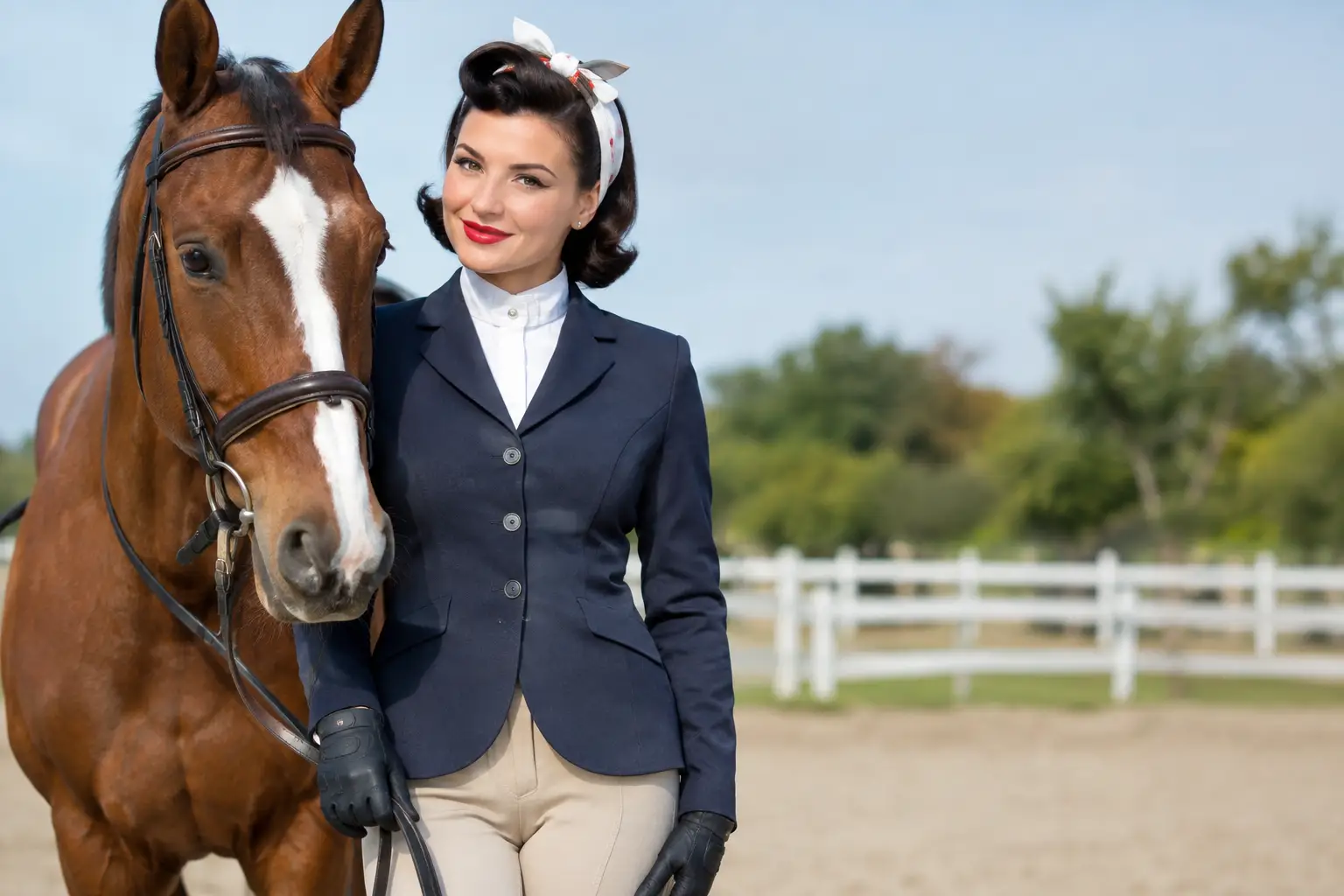
A competition coat should be tailored without feeling restrictive. Look for technical stretch through the back and sleeves, a clean front closure, and fabric that recovers its shape after time in the saddle. Traditional navy remains a dependable choice across many English disciplines because it looks professional, photographs well, and works with a broad range of shirt and stock tie colors.
Black can read formal and crisp, though it may show dust, hair, and summer heat more readily. Dark charcoal, deep green, and subtle pinstripes can be appropriate in some rings, but suitability depends on the discipline and local standards. The safest coat is rarely the loudest one.
Pay attention to the details that affect your ride: functional buttons, a hem that lies flat, sleeves long enough when your arms are extended, and a collar that stays neat instead of collapsing. Decorative accents should support the garment, not compete with your turnout.
Barn, travel, and team jackets
For show teams, instructors, grooms, and parents working around the operation, outerwear needs a different kind of discipline. It should layer easily, resist light wind and moisture, and look consistent across a range of body types. A premium soft shell is often the most versatile option because it provides warmth without the bulk that makes barn work awkward.
Lightweight insulated jackets make sense for early-season circuits, cold mornings, and long winter lesson programs. Vests are useful when riders need core warmth with unrestricted arm movement. A durable full-zip fleece can be a practical middle layer, especially for staff who spend their day moving between heated offices, arenas, and outdoor chores.
For these garments, custom embroidery creates a recognizable standard. A barn logo on the left chest, with a name or role on the opposite side or sleeve, looks intentional without turning a professional team into a walking sponsor board.
Fit Matters More Than the Size Tag
Equestrian clothing has to work while you are in motion, so do not judge fit standing still in a fitting room. Put the jacket on over the base layer you normally ride in. Reach forward as if taking contact, lift your arms as if mounting, sit down, and bend at the waist. The shoulders should move with you, not pull across your upper back.
A formal coat should skim the body with enough room for a show shirt and any required neckwear. If the buttons strain, the lapels pull open, or the back vents flare excessively, size up or try another cut. Alterations can refine sleeve length and waist shape, but they cannot create stretch where the fabric was never designed to give.
For team outerwear, allow practical layering room. A jacket that fits perfectly over a T-shirt may be too tight over a quarter-zip or lightweight vest. If you are ordering for a barn, use a size run that recognizes real people, not an idealized sample fit. Inclusive sizing and clear garment measurements reduce costly exchanges and keep the team looking consistent.
Fabric Should Match Your Climate and Schedule
There is no single best fabric because a rider showing in humid Florida has different needs than a trainer hauling through a Northeast spring. Technical competition fabrics are popular for a reason: they are lighter, more breathable, and more forgiving than traditional heavy wool blends. The trade-off is that very lightweight material can feel less structured and may not deliver the classic drape some riders prefer.
For a team jacket, prioritize a smooth, stable face fabric if it will be embroidered. It gives logos and lettering a cleaner foundation than an overly textured or thin garment. Water-resistant soft shells are useful for mist and wind, but they are not the same as waterproof rain jackets. If your staff works outdoors through real weather, consider a separate rain layer rather than expecting one branded jacket to cover every forecast.
Breathability deserves more attention than it gets. Horses, hauling, show nerves, and summer heat are a demanding combination. A jacket that traps heat may look composed for the first ten minutes and feel miserable by the afternoon. Ventilation, lighter lining, and easy layering can make a more expensive jacket the better value over a full season.
Color, Embroidery, and a Cohesive Barn Image
A coordinated barn jacket does not need to match every saddle pad, polo wrap, and trunk decal. It needs to look deliberate. Start with one or two core colors that suit your logo, hide everyday barn dust reasonably well, and remain available across garment styles. Navy, black, charcoal, and deep green are dependable foundations. Accent thread can carry more personality without making the entire garment difficult to wear.
Keep embroidered information useful. A logo, barn name, rider name, trainer title, or staff role all have a purpose. Adding every social handle, slogan, horse name, and credential can make a jacket look crowded from a distance. Clean placement and thread colors with enough contrast are part of the premium finish.
Formal show coats are usually best left unbranded unless your discipline and event setting clearly support a subtle mark. Team jackets, vests, and warm-up layers are where custom embroidery belongs. They create visibility at the showgrounds while keeping the competition turnout polished and rule-aware.
Make the Purchase Decision Like a Team Manager
Before choosing a jacket, decide how often it will be worn, what conditions it must handle, and whether it will carry embroidery. Then compare garments by the details that affect ownership: fabric performance, size availability, care requirements, color consistency, and how the finished logo will look on the garment.
For a single rider, investing in one excellent show coat and one dependable barn layer often serves better than buying several inexpensive jackets that lose their shape. For a program ordering for staff or a show team, consistency matters as much as individual preference. Select a silhouette that works across the group, establish the approved logo placement, and keep the design simple enough to reorder when new riders or employees join.
Corazón De Oro Apparel approaches custom embroidery with that professional standard in mind: durable garments, clear personalization, and a finished look that represents the barn well beyond the rail.
Care is part of the investment. Hang formal coats promptly after use, brush off dust and hair before it settles into the fabric, and follow the garment label rather than defaulting to hot water and a dryer. For embroidered outerwear, turn the garment inside out when washing and avoid harsh heat that can stress both fabric and stitching.
The right jacket should let you focus on the ride, the horses, and the people who count on you. Choose one that earns its place before the first class is called, then wear it with the quiet confidence of a team that came prepared.