Fleece Versus Softshell Jackets: Which Works?
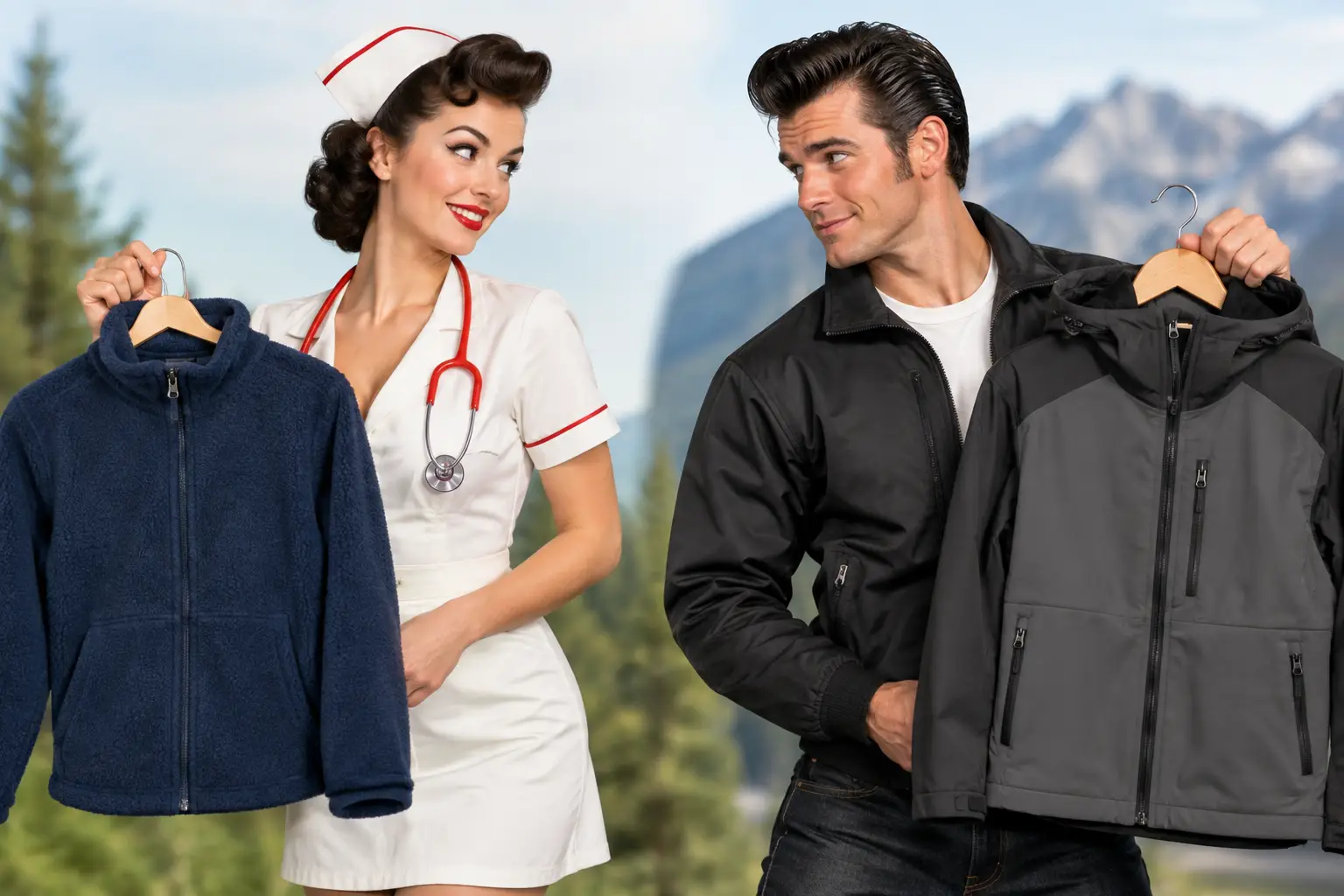
Fleece versus softshell jackets serve different jobs. Compare warmth, weather resistance, breathability, and embroidery options for polished team wear.
A jacket has to earn its place on a busy shift, a chilly barn morning, or a jobsite before sunrise. In the fleece versus softshell jackets decision, the better choice is not about which style looks more professional. Both can. It comes down to the conditions, the work, and whether your team needs insulation, weather protection, or a dependable layer that carries a logo with pride.
For medical offices, dental practices, EMS crews, schools, barns, and service teams, outerwear is also part of the uniform. The right jacket keeps people comfortable while presenting a consistent, credible image. That is why fabric choice deserves more thought than grabbing whatever is on sale in the supply catalog.
Fleece Versus Softshell Jackets: The Core Difference
Fleece is primarily an insulating layer. It is soft, warm for its weight, and comfortable indoors or in dry, cool weather. Most fleece jackets are made from polyester fibers brushed to create a plush surface that traps warm air near the body. Think early clinic mornings, overly air-conditioned offices, chilly classrooms, or a quick walk from the parking lot to the unit.
A softshell is built for movement and changing weather. It usually combines a smooth, durable outer face with a breathable middle layer and a soft interior. Many styles include a water-resistant finish and wind resistance, though they are not meant to replace a fully waterproof rain jacket. Softshells are the sensible choice when the day includes wind, light rain, outdoor work, travel between sites, or frequent transitions from indoors to outdoors.
The practical shorthand is simple: fleece prioritizes warmth and softness; softshell prioritizes weather resistance, structure, and mobility.
When Fleece Is the Better Jacket
Fleece has a reputation for being casual, but the right fleece jacket can look polished enough for a front desk, therapy practice, veterinary clinic, or team event. Its biggest advantage is immediate comfort. It feels warm the moment it goes on, without the weight or bulk of heavier outerwear.
For healthcare and office-based teams, fleece works especially well when the jacket will be worn mostly indoors. A nurse managing the temperature swings between patient rooms and break rooms does not necessarily need a wind-blocking shell. A fleece zip-up provides an easy layer that can come off quickly when the pace picks up. It is also a strong option for staff appreciation gifts because sizing is forgiving and the feel is universally familiar.
Fleece is not the best answer for every environment. It can catch light rain, but it absorbs moisture more readily than a softshell and loses some of its comfort once wet. Wind can also cut through standard fleece, especially on an open parking lot, a field, or around a barn. If your team spends real time outside, fleece often works best as a midlayer under a weather-resistant outer jacket.
Fleece strengths for professional teams
Fleece is warm, lightweight, and approachable. It is often the easier choice for employees who want a soft layer for indoor use, and it can offer a lower-cost path to coordinated custom apparel. It also has a relaxed, off-shift feel that makes it useful beyond work - a win when you want people to actually wear the piece after the event photo is over.
The trade-off is visual structure. Fleece generally looks more casual than softshell, and some lofty fleece fabrics can be less ideal for intricate embroidery. A clean left-chest logo, name, or department mark usually performs well, but very small text and highly detailed artwork need thoughtful digitizing and placement.
When a Softshell Is the Better Jacket
A softshell jacket is built for teams who work around the weather rather than avoiding it. It handles wind better than fleece, sheds light precipitation, and typically has enough stretch to make lifting, driving, walking rounds, or working with equipment more comfortable. It also tends to keep a cleaner, more tailored silhouette throughout the day.
That structure makes softshell a natural fit for client-facing teams. Dental and medical practices, real estate teams, school staff, hospitality groups, trades, and equestrian organizations often choose softshells because they look intentional without feeling stiff. Add a professionally embroidered logo, name, or credential, and the jacket reads as a uniform rather than a giveaway.
For EMS, field services, veterinary teams, and barn staff, the weather resistance matters. A softshell will not keep someone dry through a sustained downpour, but it is well suited to mist, drizzle, wind, and the kind of unpredictable conditions that show up between the vehicle and the next call. It is a dependable three-season layer in much of the United States.
Softshell strengths for custom embroidery
Softshell fabric has a smooth outer face that gives embroidery a sharp, professional presentation. Logos often sit cleanly on the chest or sleeve, and the jacket’s structured surface helps lettering stay legible. This matters when the design includes a practice name, credentials, department title, or a logo that needs to look as polished at month 18 as it did on delivery day.
There are trade-offs here, too. Softshells are usually less insulating than a heavier fleece, so someone standing still in cold weather may need a base layer or an insulated jacket underneath. They can also cost more, particularly when you choose premium materials, water resistance, stretch, and durable construction. For a team order, that added investment is often justified by a longer service life and a more elevated appearance.
Compare the Conditions, Not Just the Fabric
The most useful question is not, “Which jacket is better?” It is, “What will our people be doing while wearing it?” A reception team working in a climate-controlled office has different needs than a mobile phlebotomy crew, and a barn manager has different needs than a clinic administrator.
Choose fleece when warmth, softness, and indoor comfort matter most. It is a practical layer for staff who work in cool interiors, commute in mild weather, or want something comfortable enough to wear on days off. It is also a smart option for casual team gifts, student groups, and staff events where a relaxed look fits the occasion.
Choose softshell when wind, light moisture, activity, and presentation matter most. It is better suited to teams that are regularly outdoors, moving between locations, greeting clients outside, or representing the organization at events. If the jacket needs to feel like professional outerwear rather than a cozy layer, softshell usually has the edge.
For organizations with varied roles, a mixed program can be the most practical answer. Front-office staff may prefer fleece, while field staff choose softshell in matching brand colors with the same embroidered logo. Consistency does not require everyone to wear the exact same garment. It requires a clear standard for color, logo placement, and quality.
Fit, Layering, and the Details People Notice
A jacket that fits poorly will stay in the closet, no matter how good the embroidery looks. Before ordering for a group, consider how employees will layer underneath. Healthcare professionals may wear scrubs or a lightweight top. Trades and outdoor crews may need room for a thermal layer, hoodie, or uniform shirt. Softshell jackets with stretch offer useful mobility, while fleece often has a more forgiving feel through the torso.
Pay attention to zipper quality, pocket placement, collar height, cuff finish, and fabric weight. These are small details until someone is wearing the jacket for a 12-hour shift, crouching to work, or reaching for a radio. A high collar can add welcome protection outdoors, but may feel restrictive for indoor wear. Zip pockets are valuable for keys, badges, phones, and the usual collection of shift essentials that somehow multiplies by noon.
Color should serve the job, too. Black, navy, charcoal, and gray remain strong choices for professional teams because they coordinate easily and hide everyday wear. Brighter colors can make sense for EMS, school groups, barn teams, or event apparel. Whatever color you choose, confirm that the thread color provides clear contrast and that the logo remains readable from a normal distance.
Make the Embroidery Match the Garment
Custom embroidery should complement the jacket, not fight it. On fleece, simple logos and clean text usually create the best result. On softshell, a more detailed logo can often be reproduced with excellent clarity, provided it is sized appropriately for the placement.
Left-chest embroidery remains the professional standard for names, credentials, practice logos, and department identification. Sleeve embroidery can add a secondary mark such as a flag, specialty designation, or team name without crowding the front. For larger groups, establish those placement decisions before individual names are added. It protects consistency and prevents a uniform order from looking improvised.
At Corazón De Oro Apparel, the best custom jacket programs start with the actual workday, not a stock photo. Consider the environment, the level of client contact, the weather exposure, and how the garment will carry your identity over time. That approach leads to pieces people are proud to put on.
The right choice is the one your team reaches for when the temperature drops, the wind picks up, or the shift runs long. Pick fleece for the comfort people feel immediately. Pick softshell for the protection and polish they will notice every time they step outside.