When Should Teams Reorder Apparel? Plan Ahead
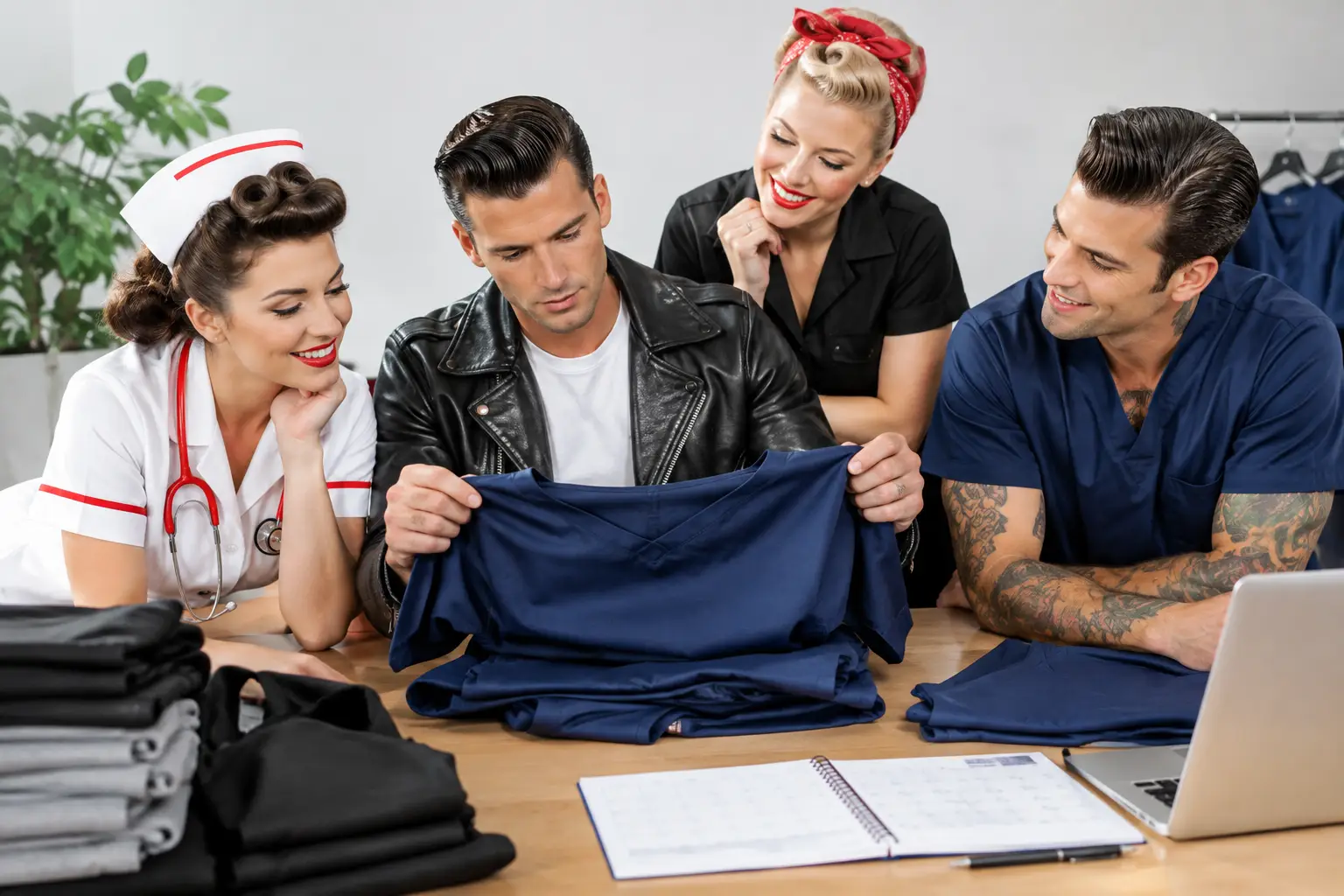
Know when should teams reorder apparel with practical stock triggers, seasonal planning, and fit standards that keep every crew polished and prepared.
A new team member arrives Monday. The jacket order is already in production, but her size was missed. Meanwhile, half the front desk is wearing faded polos from two years ago, and the busy season starts in three weeks. That is usually when leaders ask, when should teams reorder apparel? The better answer is: well before one missing size, one stained vest, or one major event turns a simple reorder into a rushed compromise.
For medical practices, EMS units, barns, schools, offices, and service teams, branded apparel is not an afterthought. It is part of the standard your patients, clients, students, and customers see first. A planned reorder keeps that standard intact without tying up budget in a closet full of unused inventory.
When Should Teams Reorder Apparel?
Most teams should review apparel inventory at least twice a year, with a separate check before a new season, major event, or expected hiring period. The actual reorder should happen when stock reaches a defined trigger, not when the last clean jacket disappears.
A useful rule is to reorder when you have enough apparel left to cover current needs during the production and delivery window, plus a small buffer for exchanges, new hires, and unexpected wear. For teams that issue uniforms daily, that point arrives sooner than it does for a group that wears embroidered polos only at events.
The right cadence depends on how the garment is used. A dental office may get a full year or longer from a rotation of embroidered jackets. An EMS team putting outerwear through weather, vehicle calls, and frequent laundering may need to replace pieces more often. Barn staff have their own version of the same math: dust, weather, chores, and hard use show up on apparel quickly.
The goal is not to replace everything on a fixed calendar. It is to keep the team looking consistent while replacing what has genuinely reached the end of its useful life.
Set Reorder Triggers Before You Need Them
The cleanest apparel programs use a few clear triggers. They remove guesswork from the person responsible for ordering and give leaders a defensible reason to allocate budget.
Start with headcount. If your team adds people steadily, do not wait for a quarterly order to outfit them. Keep a small reserve of core garments in the most common sizes, or schedule a reorder whenever new hires reach a practical group size. This works especially well for polos, vests, and jackets that carry a shared logo but do not need individual names.
Next, track condition. Fading, pilling, cracked print, frayed cuffs, stubborn stains, and damaged embroidery are visible signs that a garment should be retired. One worn piece may seem minor, but a mixed-quality uniform program makes the whole team look less organized. This matters in patient-facing, client-facing, and hospitality roles where trust is built in small details.
Also watch size availability. If the team repeatedly borrows from another department, makes do with an awkward fit, or cannot replace a lost piece in the proper size, inventory is already too thin. Fit is not a luxury. A garment that is too tight, too long, or poorly suited to the job will stay in a locker instead of being worn.
Finally, set a trigger around events and seasonal shifts. Order before trade shows, school openings, holidays, show season, new-service launches, staff photo days, and peak patient volume. Apparel ordered for an occasion should arrive early enough for fit checks and corrections, not just early enough to be technically delivered.
Build the Reorder Timeline Backward
A reorder date should begin with the date the apparel must be in service. Work backward from there, leaving time for approvals, garment selection, logo review, embroidery, shipping, distribution, and any size exchanges.
Custom embroidery deserves more runway than a basic restock because the finished piece includes decisions that affect both appearance and durability: garment style, color, logo placement, thread color, names, credentials, and size run. A clean proof process prevents expensive surprises, but it still requires time. For teams with several decision-makers, the approval stage can take longer than production.
Avoid planning around the best-case scenario. If an open house is on June 1, do not treat late May as your target. Aim for apparel in hand with enough margin to inspect every piece, sort it by recipient, and address a missed size without drama. The same thinking applies to annual staff gifts. The calendar is not flexible just because the order was delayed.
For a first custom order, allow extra time to confirm the logo and establish a consistent look. Once the team has selected its core garments and embroidery details, future reorders become much simpler. Consistency is one of the advantages of staying with a proven program.
Use a Core-and-Seasonal Approach
Teams often spend too much trying to make one garment work for every situation. A better approach is to define a core uniform layer and add seasonal or role-specific pieces around it.
Your core might be an embroidered polo for warm weather, a quarter-zip or jacket for cooler days, and a vest for staff who need mobility. A clinic may choose polished jackets for reception and provider-facing roles, while a field crew prioritizes durable layers that can move with the work. A barn may favor outerwear that handles early mornings and changing conditions.
Seasonal pieces should be reviewed ahead of the weather, not after it changes. Lightweight apparel ordered after the first heat wave will not solve the immediate problem. The same goes for cold-weather jackets ordered after everyone has already started layering random personal gear over their uniforms.
This approach also protects the budget. Rather than ordering a full replacement set for every person at once, you can maintain the essential branded layer and refresh specialty items as conditions require. The result is more practical than a closet full of identical pieces no one reaches for.
Standardize What Should Stay Standard
Reorders are easier when fewer decisions have to be reopened each time. Keep a simple record of approved garment styles, colors, logo files, embroidery placement, thread colors, and naming conventions. If credentials are included, decide how they will appear before the first order and apply that rule consistently.
That does not mean every team member must wear the exact same garment. Roles, body types, and work environments differ. It means the collection should look intentional. A navy embroidered vest, a coordinating polo, and a matching jacket can give staff options without creating a patchwork of unrelated colors and logos.
There is a trade-off here. More options can improve comfort and adoption, but too many options complicate ordering, inventory, and visual consistency. Most teams do best with a focused menu of approved choices rather than an open-ended catalog.
Budget for Replacement, Not Just Launch Day
The first apparel order usually gets attention because it is visible and exciting. The stronger plan includes replacement funds from the beginning. Garments wear out. People change sizes. Staff members leave. New hires arrive. A logo may remain unchanged for years, but the people wearing it will not.
Consider an annual apparel allowance or a set replacement schedule for high-use roles. Some organizations issue a defined number of pieces per employee and replace them at regular intervals. Others maintain a central budget for approved replacements. Either model can work, provided the process is clear and does not require employees to negotiate for a presentable uniform.
For smaller teams, group reorders can control costs and keep garments consistent. For larger organizations, keeping a modest supply of unpersonalized core pieces can reduce delays. Personalized names or credentials can then be added as needed, instead of forcing the entire team to wait for one new staff member.
Inspect What the Team Is Actually Wearing
A spreadsheet tells part of the story. A quick walk through the workplace tells the rest. Look at what staff choose on a normal workday. Are the embroidered pieces being worn proudly, or are people defaulting to personal layers? Are certain fits always left behind? Is one garment holding up better after repeated washing than another?
That feedback should shape the next order. Premium apparel earns its place when it is comfortable enough for the shift and polished enough for the public. The best logo treatment in the world cannot rescue a garment people avoid wearing.
Ask managers and team members a few direct questions before reordering: Which pieces perform best? Which sizes run short? What is showing wear first? Are there new job functions or weather conditions the current program does not cover? A short check-in can prevent repeating an expensive mistake.
For teams that want a professional, repeatable standard, Corazón De Oro Apparel can help turn those decisions into custom embroidered jackets, vests, polos, and uniforms with a finish that respects the work.
A planned reorder is not about buying more apparel for its own sake. It is about making sure the person greeting a patient, loading a truck, teaching a class, or stepping into the arena has a piece that fits, performs, and represents the team well. Set the trigger early, leave room for the details, and let the finished apparel do its job.