EMS Station Clothing Guide for Every Shift
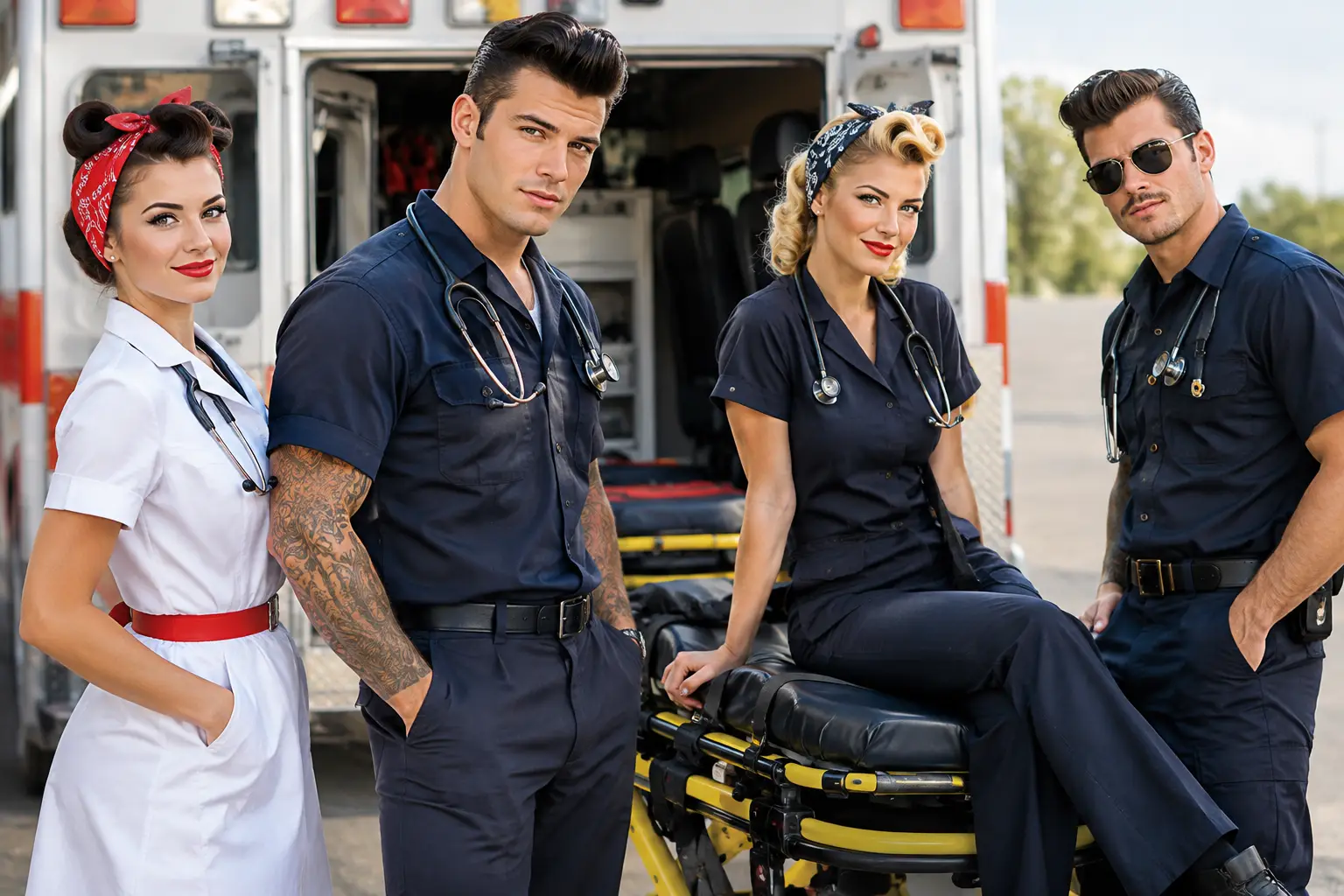
Use this EMS station clothing guide to choose durable layers, duty-ready footwear, and off-shift pieces that look professional and feel like your own each shift.
The station is not a runway, but it is not a storage locker either. What you wear between calls has to be ready for turnout, comfortable through a long holdover, and presentable when the public walks through the door. This EMS station clothing guide is built around that reality: choose pieces that respect the job, meet your agency’s policy, and still feel like something you would choose to wear.
Start With Your Agency’s Uniform Policy
Before fabric, fit, or color, start with the rules. EMS clothing policies vary widely. One service may require a department-issued polo and approved navy pants for every shift; another may allow station T-shirts, crewnecks, and job shirts with a unit patch. Some agencies draw a hard line between public-facing uniforms and clothes worn only inside the station.
That distinction matters. A garment that is perfect for report writing, meal prep, apparatus checks, and a quiet hour in the bunk room may not be appropriate for a patient contact, a public event, or a call that turns into a media-facing scene.
Read the policy for approved colors, logo placement, outerwear, footwear, name and credential requirements, and restrictions on graphics. If the policy leaves room for personal choice, use that room with discipline. Clean, coordinated station clothing reflects well on the crew without asking anyone to look like they are wearing a catalog page.
Build a Station Kit, Not a Random Pile of Shirts
The best station wardrobe is a small system. It should let you adjust to cold bays, overheated rigs, changing weather, surprise overtime, and the fact that a “slow day” is often a trap. Start with a dependable base layer, add an approved midlayer, and keep a weather-ready outer layer close by.
A premium cotton-blend or performance T-shirt works well as the base when policy permits. Look for a shirt with enough weight to hold its shape, a collar that does not curl after repeated washing, and a fit that stays put while lifting bags or reaching overhead. Very thin shirts can feel good at first, then become clingy, transparent, or worn out after a few hard laundry cycles.
For cooler stations, a crewneck sweatshirt, quarter-zip, or job shirt earns its place quickly. A quarter-zip looks more polished in public-facing settings and gives you a little ventilation when the station heat is doing too much. A crewneck is simple, durable, and easy to layer. A hooded sweatshirt can be ideal off duty or during downtime, but a hood may be impractical under certain outerwear or restricted by agency policy.
Keep one clean backup shirt and an extra pair of socks in your locker or gear bag. That is not overpacking. It is the difference between finishing a long shift comfortably and spending the next six hours wishing you had planned ahead.
Choose fabric for the work, not the label
Cotton is comfortable and familiar, especially for station wear. Its trade-off is moisture retention. If you are moving equipment in heat, training outside, or working a high-call-volume shift, a cotton-heavy shirt can stay damp longer than you want.
Performance blends dry faster and usually hold color well, but the hand feel varies. Some are too slick, too warm, or prone to holding odor. For many crews, a cotton-poly blend is the practical middle ground: soft enough for a 24-hour shift, durable enough for frequent washing, and structured enough to look professional.
Avoid treating one fabric as the universal answer. The best choice depends on climate, your call volume, the station temperature, and whether you are wearing the garment as a base layer or on its own.
Pants Need Mobility, Structure, and a Clean Finish
Station pants take more abuse than almost anything else you wear. You sit, kneel, climb, carry, train, clean, and occasionally discover exactly where the engine bay floor has been hiding its grime. Choose pants that can handle movement without looking baggy or feeling restrictive.
Approved tactical-style pants are common for a reason. They offer useful pocket space, reinforced construction, and a professional profile when the fit is right. The key phrase is “when the fit is right.” Pants that are overly loose catch on equipment and look untidy; overly tight pants limit range of motion and wear out at stress points.
Look for a waistband that stays comfortable during long periods seated, articulated knees or a gusseted construction if your role calls for frequent movement, and fabric that holds up to washing. Dark, policy-approved colors are practical because they hide minor stains better, but they still need regular laundering. Hiding the evidence is not the same as being clean.
Cargo pockets are useful, not mandatory. If your essential tools already live on your belt, vest, or in the rig, too many loaded pockets can make a long shift uncomfortable. Buy for how you actually work, not for the number of compartments on the tag.
Footwear Is a Safety Decision
Good station footwear is not a fashion accessory. It affects fatigue, traction, ankle support, and how your body feels at hour 20. Most EMS professionals need a closed-toe, slip-resistant shoe or boot that meets agency requirements and can transition quickly from the station floor to a call.
Boots provide support and protection, particularly when you are moving equipment or operating around apparatus. Their trade-off is weight and heat. A lighter duty shoe may be more comfortable for an urban service with extensive driving and indoor calls, but it may offer less protection in rough conditions. There is no one right answer beyond your policy and your operational environment.
Whatever you choose, break it in before relying on it for a full shift. Replace insoles when cushioning fails, rotate pairs if you work frequent shifts, and do not wait for a slick sole to become an incident report. Wear clean socks with enough cushioning to reduce friction. This is a small detail until it is not.
Keep the Public-Facing Version Ready
EMS is often seen before it is heard. A patient, family member, facility staffer, or bystander may form an impression of your crew in seconds. A clean polo, embroidered quarter-zip, or well-fitted jacket with a clear name and department identifier can help establish confidence before the first set of vitals.
For teams that need a consistent look, custom embroidery is the right standard. A department logo, name, credential, or unit designation should be legible, placed intentionally, and stitched on a garment built for repeated wear. The goal is not to turn the crew into promotional merchandise. It is to make identification simple and reinforce the professionalism patients expect.
For a station-only layer, a ready-made EMS design can bring a little personality into the shift. The best medical humor is the kind that colleagues recognize immediately and patients never have to decode. Keep it for the setting where it belongs, and let your public uniform do its job without competing for attention.
Laundry Is Part of the Uniform Standard
A good EMS station clothing guide has to address the least glamorous part: washing it. Station clothing collects sweat, food, disinfectant residue, dust, and whatever else the shift decides to contribute. Follow your agency’s exposure and decontamination procedures first, especially after patient contact or known contamination.
For everyday station wear, turn printed garments inside out, wash like colors together, and avoid excessive high heat that can shrink cotton or damage prints and embroidery. Treat stains promptly. Do not leave a damp job shirt in the bottom of a bag for three days and expect it to return to service with dignity.
Keep contaminated duty clothing separate from personal items until it can be handled according to policy. Station apparel should support a clean transition between work and home, not blur it.
Fit Should Look Intentional
You do not need tailored clothing to look put together, but you do need the right size. Shoulder seams should sit near the shoulder, sleeves should not interfere with handwork, and hems should stay in place when you bend or reach. Try outer layers over the shirt you actually wear on shift, not over a thin undershirt in a fitting room.
For custom team orders, collect sizing information carefully and consider sample garments when possible. A clean embroidered jacket loses some of its authority if half the crew is swimming in it and the other half cannot move their arms. Consistency is not everyone wearing the same size. It is everyone wearing a garment that fits their work.
Your station clothing does not have to be flashy to carry pride. Choose gear that performs, stays clean, and represents your crew well. Then save the personality for the layer that makes your partner laugh at 0300 - which is sometimes the most useful piece of equipment in the building.