Veterinary Clinic Team Uniforms That Work Hard
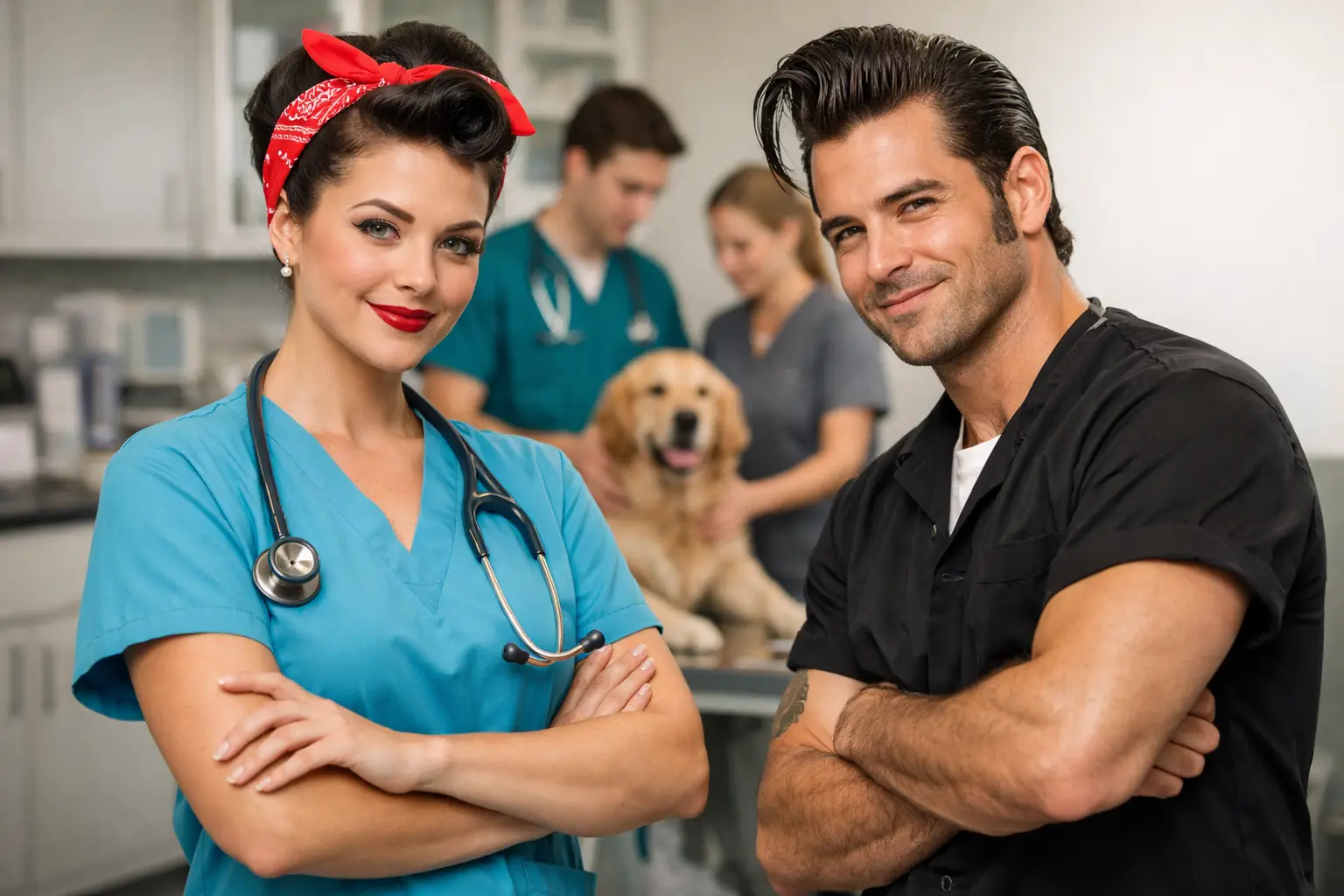
Veterinary clinic team uniforms should look polished, move easily, and last through real work. Choose embroidered layers and apparel your staff can trust.
A dog shakes off after a rainy walk. A technician moves from treatment to reception. A client arrives worried and starts looking for someone who appears calm, capable, and ready. Veterinary clinic team uniforms do more than put a logo in the room. They create instant visual order in a workplace where the day rarely follows the schedule.
For a veterinary practice, the right uniform program has to stand up to real conditions: fur, disinfectant, lifting, bending, temperature swings, and a steady stream of patients who have no interest in preserving a clean hem. It also needs to look polished enough to reinforce the trust clients place in your team. That balance is the standard, not an extra.
Start With the Work, Not the Catalog
The best veterinary clinic team uniforms begin with a clear look at who is wearing them and what they do during a normal shift. A front-desk coordinator has different needs than a veterinary assistant. A doctor rotating through exam rooms, surgery, and client consultations needs a different layer than a kennel attendant working outdoors in January.
One garment for every role can be efficient, but it is not always the most practical answer. A coordinated system usually works better: embroidered polos or quarter-zips for reception and client-facing staff, durable jackets or vests for technicians and doctors, and role-appropriate workwear for employees handling more physical or outdoor responsibilities. The shared logo, thread colors, and garment palette keep the team cohesive without forcing every person into the same piece.
Before selecting styles, consider your clinic's actual environment. Is the building consistently cold? Do team members move between indoor treatment areas and outdoor runs? Are clients greeted at the door, in the lobby, or curbside? These details determine whether a lightweight performance layer, a structured soft-shell jacket, or a warm vest will earn its place in the rotation.
Choose Fabrics That Respect the Shift
A uniform can look sharp on the first day and still be a poor investment if it pills, fades, snags, or becomes uncomfortable after repeated washing. Veterinary work is hands-on. Fabric performance matters.
For polos and lightweight layers, look for materials that hold their shape, manage moisture, and remain comfortable during long periods of movement. For jackets and vests, prioritize durable outer fabrics, dependable zippers, and construction that does not feel restrictive across the shoulders. Stretch can be valuable for technicians and assistants, but too much thin, slick fabric may not deliver the professional structure some practices want at the front desk or during client consultations.
Color is a practical decision, too. Black, charcoal, navy, and deep green offer a clean, professional foundation and tend to be forgiving when the day gets messy. That does not mean every clinic has to look identical. A warm embroidered thread color, a crisp logo treatment, or a coordinated accent piece can reflect the practice's personality without turning the uniform into a promotional giveaway.
The trade-off is simple: lighter colors can feel approachable and bright, but they show more of the work. Darker colors conceal more, but can feel warm in a busy treatment area. Choose based on the climate, dress expectations, and cleaning realities of your clinic.
Custom Embroidery Makes the Difference
A printed logo may have a place for an event tee or a staff appreciation gift. For daily professional apparel, custom embroidery delivers a more durable, intentional finish. It gives a jacket, vest, or polo the appearance of a true uniform rather than an off-the-shelf garment with a logo added at the last minute.
For most practices, the cleanest setup is an embroidered clinic logo on the left chest. Names, credentials, or titles can be added when they help clients identify who is caring for their pet. A veterinarian's name and DVM credentials may add confidence in an exam room. A first name and role can make communication easier for support staff. The right choice depends on the size of the team, the practice culture, and how formal the client experience is meant to feel.
Keep the embroidery readable. A logo with fine lines, tiny lettering, or too many color changes may need to be simplified for stitching. This is not a compromise in quality. It is good uniform design. Strong embroidery is clear from a few feet away, balanced on the garment, and scaled appropriately for the placement.
A disciplined thread palette also matters. Choose colors that reproduce consistently across jackets, vests, and polos. One logo on three unrelated garment colors can look scattered. A defined uniform palette makes future reorders easier and helps new hires look like part of the team from day one.
Build a Uniform System Employees Will Wear
Uniform compliance improves when staff members are given pieces that feel good and make sense for their role. That does not require an endless menu of options. It requires a small, well-chosen range.
A practical veterinary apparel program may include an embroidered polo for daily client-facing wear, a vest for cooler treatment areas or outdoor duties, and a jacket for travel, early mornings, and colder months. If your clinic uses scrubs, branded outerwear can provide the consistent visual layer that scrubs alone often lack. It lets the team maintain the comfort they need while presenting one recognizable practice identity.
Sizing deserves the same attention as logos and fabric. Offer an inclusive size run and gather sizes early, especially for an initial order. A jacket that is too tight across the back or too long in the sleeves will spend more time on a chair than on the employee. If possible, establish a sizing process before production rather than relying on assumptions from a previous brand or garment style.
For larger teams, it helps to define who receives what. New-hire kits, annual replacement schedules, and role-based allowances prevent the program from becoming inconsistent over time. A polished clinic should not have five staff members in matching embroidered layers and three more in faded, unrelated pieces because no reorder plan existed.
Protect the Brand Without Making It Precious
Veterinary professionals work with animals, not mannequins. The uniform program needs to allow for that. A premium embroidered jacket is meant to be worn, washed, and worn again. It should reflect pride in the practice, but it should never make the team feel too dressed up to do the work.
Set clear care expectations from the beginning. Most embroidered garments benefit from washing in cold water, turning the item inside out when appropriate, and avoiding high heat that can affect fabric performance or embroidery backing. The exact care instructions will vary by garment, so staff should receive the guidance that matches the piece they are issued.
It is also smart to order with growth and replacement in mind. Staff turnover, new hires, promotions, and seasonal needs are normal. Choosing a core collection that can be reordered later is more valuable than selecting a one-time style that disappears after the first run. Consistency is built over time, not just at the launch meeting.
Make the Client Experience Feel More Organized
Clients may not remember the thread color on a technician's vest, but they notice the overall effect. A coordinated team appears prepared. Clear names and roles reduce awkwardness. Quality apparel signals that the practice pays attention to details, which matters when a client is deciding where to place trust during a difficult appointment.
That effect is especially valuable for multi-doctor practices, specialty clinics, mobile veterinary services, and hospitals with a mix of reception, care, and support teams. Uniforms help people quickly understand who is part of the practice and who can help them. They also give employees a visible point of pride, particularly when the garments are comfortable enough to become part of their actual workday.
Corazón De Oro Apparel approaches custom embroidery with that standard in mind: premium garments, clear customization, and a finish that belongs in a professional setting. The goal is not to cover a team in generic branded merchandise. It is to give them workwear that looks as capable as they are.
A veterinary uniform program should make the morning easier, not create another decision before the first appointment. Choose pieces your team can move in, embroider them with purpose, and build enough consistency that every new hire knows exactly what it means to represent the practice.