Polo Versus Scrub Tops for Professional Teams
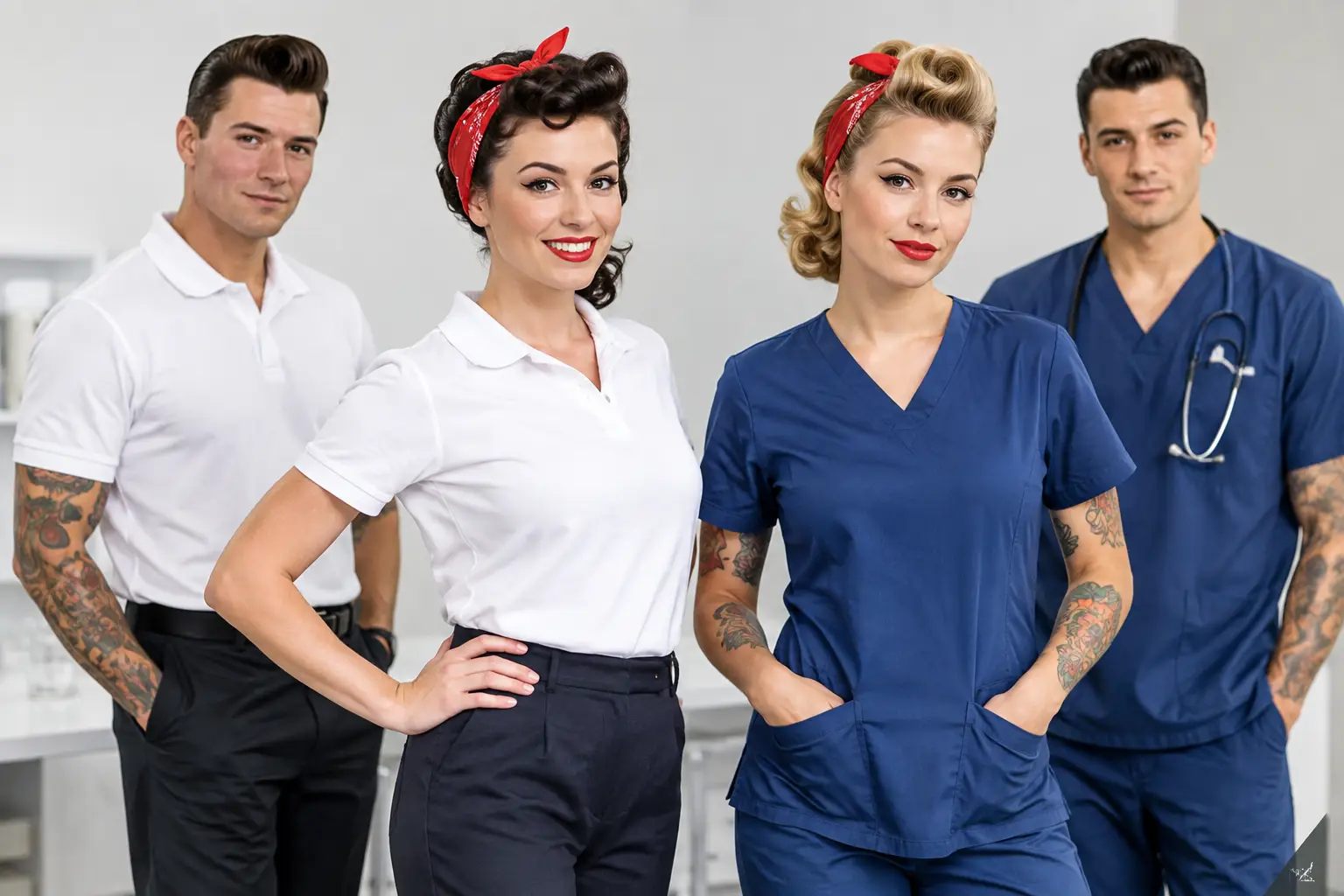
Polo versus scrub tops comes down to role, hygiene, comfort, and brand presence. Choose polished custom apparel that works for your team.
A front-desk coordinator in a crisp embroidered polo and a medical assistant in scrubs are both representing the same practice. They should not necessarily be dressed the same. The polo versus scrub tops decision is less about which garment looks better and more about what the job requires, what patients expect, and how your team moves through the day.
For a healthcare office, dental practice, veterinary clinic, EMS support team, or specialty service business, apparel is part of the operating standard. It signals who belongs on the team, who patients can approach, and how seriously the organization takes its work. The right choice can make a shift more comfortable and a team more recognizable. The wrong one can leave employees overheated, underprepared, or looking like they were dressed by three different vendors.
Polo Versus Scrub Tops: Start With the Role
Scrub tops were built for clinical work. Their practical design, easy-care fabric, and straightforward fit make sense for professionals who provide hands-on patient care, work around fluids, move between exam rooms, or need to layer for a long shift. Nurses, medical assistants, dental assistants, veterinary technicians, phlebotomists, and many therapy staff members usually benefit from scrubs because the garment matches the pace and realities of their work.
Polos serve a different purpose. They are polished, approachable, and appropriate for roles where a uniformed appearance matters but clinical apparel is not necessary. Think reception, patient coordination, practice management, sales, administration, hospitality, field service, school staff, equestrian teams, and trade professionals meeting customers face to face.
That distinction matters. A polo can look sharp at the front desk, during an open house, or in a client meeting. A scrub top can be the better call when an employee may need to assist chairside, reset an exam room, or handle the unpredictable part of the job that never appears on the schedule.
Some teams need both. A dental office may outfit clinical staff in coordinated scrub tops while reception and administrative staff wear embroidered polos in the same brand colors. The result is clear role visibility without sacrificing a unified look.
When Scrub Tops Are the Better Uniform
Scrub tops earn their place through function. They are designed for repetitive movement, frequent washing, and the kind of workday where bending, reaching, lifting, and moving quickly are standard. The best options feel professional without feeling restrictive, particularly for staff members completing twelve-hour shifts or rotating between direct care and support tasks.
For clinical teams, scrubs can also create useful visual clarity. Patients often recognize scrubs as healthcare attire immediately. In a busy clinic, that helps them identify who can assist them, even before they read a badge or embroidered credential.
Color-coding can add another layer of organization. A practice may assign one color family to clinical staff and another to providers or specialty departments. This should be handled with restraint. Too many colors can make a team look fragmented rather than coordinated. A simple palette, consistent embroidery placement, and readable thread color usually look more premium than a rainbow of competing uniform choices.
Scrub tops are not automatically the best answer just because a business is healthcare-related. A billing specialist, scheduler, or office manager may prefer a polo or professional layered piece that better fits their day-to-day responsibilities. Uniforms should support the job, not turn every employee into a costume version of another role.
When a Polo Is the Smarter Choice
A quality polo is a workhorse when the goal is polished brand presence with everyday comfort. It sits comfortably between a T-shirt and a button-down: more professional than casual apparel, less formal and less fussy than traditional office attire. With clean custom embroidery, a polo gives a team a finished appearance without the disposable feel of basic promotional merchandise.
Polos work especially well for employees who spend their day greeting people, representing the company off-site, attending events, traveling between locations, or working in customer-facing service roles. They are also an excellent choice for teams that need one recognizable uniform across a range of body types and job functions.
Fabric is where the difference shows. Cotton-rich polos can feel soft and familiar, but may show wrinkles more readily. Performance polos are often better for active roles, warmer climates, and employees who need moisture management. A textured or structured knit can elevate the appearance for offices, managers, and teams that regularly meet clients.
The embroidery should match the garment's purpose. A small left-chest logo with a name or credential below it is classic for a reason: it is visible, professional, and easy to read at conversational distance. Oversized logos may work for event apparel, but they can overwhelm a premium polo meant for daily wear.
Hygiene, Dress Codes, and Practical Boundaries
The polo versus scrub tops question should also account for workplace policy. Some clinical settings have specific infection-control requirements, laundering expectations, or restrictions around garments worn in treatment areas. Local rules and internal protocols should guide the final decision, especially in settings with direct patient care, surgical procedures, or heightened exposure risks.
A polo may be acceptable for certain clinical-adjacent roles but not ideal in every treatment environment. Likewise, a scrub top may be practical but too informal for employees who conduct consultations, welcome patients, or represent the practice at community events.
Layers deserve attention, too. Branded jackets and vests can bring consistency to a mixed uniform program, especially in cold offices or mobile roles. They should complement the base uniform rather than hide every identifying detail. A visible name badge, embroidered logo, or clear department designation helps patients know who they are speaking with.
Build a Team Look Instead of Buying One Garment
The strongest uniform programs do not force one item onto every person. They establish a visual system. That can mean a shared logo, a controlled color palette, consistent thread colors, and defined embroidery placement across polos, scrub tops, jackets, and vests.
For example, a veterinary practice might use charcoal performance polos for reception and client services, matching scrub tops for technicians, and embroidered outerwear for managers and mobile staff. Each garment meets a different need, but the practice still looks like one team. That is more intentional than ordering whatever is cheapest in each department and hoping the logo ties it together.
Fit should be part of the system as well. Employees wear uniforms longer and represent the brand better when the garments are comfortable. Offer an appropriate size run, consider both men's and women's fits where available, and avoid making assumptions about what will work for every member of the team. A polished uniform loses ground quickly when someone is constantly tugging at the collar or trying to make an ill-fitting shirt look presentable.
Questions to Ask Before You Order
Before choosing polos, scrub tops, or a mix of both, get clear on the daily reality of each role. Ask whether the employee provides direct care, whether their work involves exposure or frequent laundering, how much physical movement the position requires, and whether they regularly meet patients or clients in a reception or business setting.
Then consider what the garment needs to communicate. Do you need instant clinical recognition? A more elevated customer-facing presence? A clear department distinction? Or simply a reliable branded layer for a team that works hard and sees a lot of people every day?
For custom embroidery, keep the design disciplined. Provide a clean logo file, confirm the exact wording of names and credentials, and choose thread colors with enough contrast to remain legible. Small details are where premium apparel either earns its place or starts to look like an afterthought.
The Better Choice Is Often Both
There is no universal winner between polos and scrub tops. Scrubs are the right tool for many clinical roles. Polos are often the stronger choice for professional, customer-facing, and administrative work. Teams with overlapping responsibilities may need a coordinated combination rather than a single uniform rule.
At Corazón De Oro Apparel, the standard is not to put a logo on any garment and call it branding. It is to choose apparel that respects the work, fits the role, and gives the team a look they can wear with pride. When the uniform makes sense for the person wearing it, that confidence shows before the first conversation of the day.