Embroidered Versus Printed Uniforms for Teams
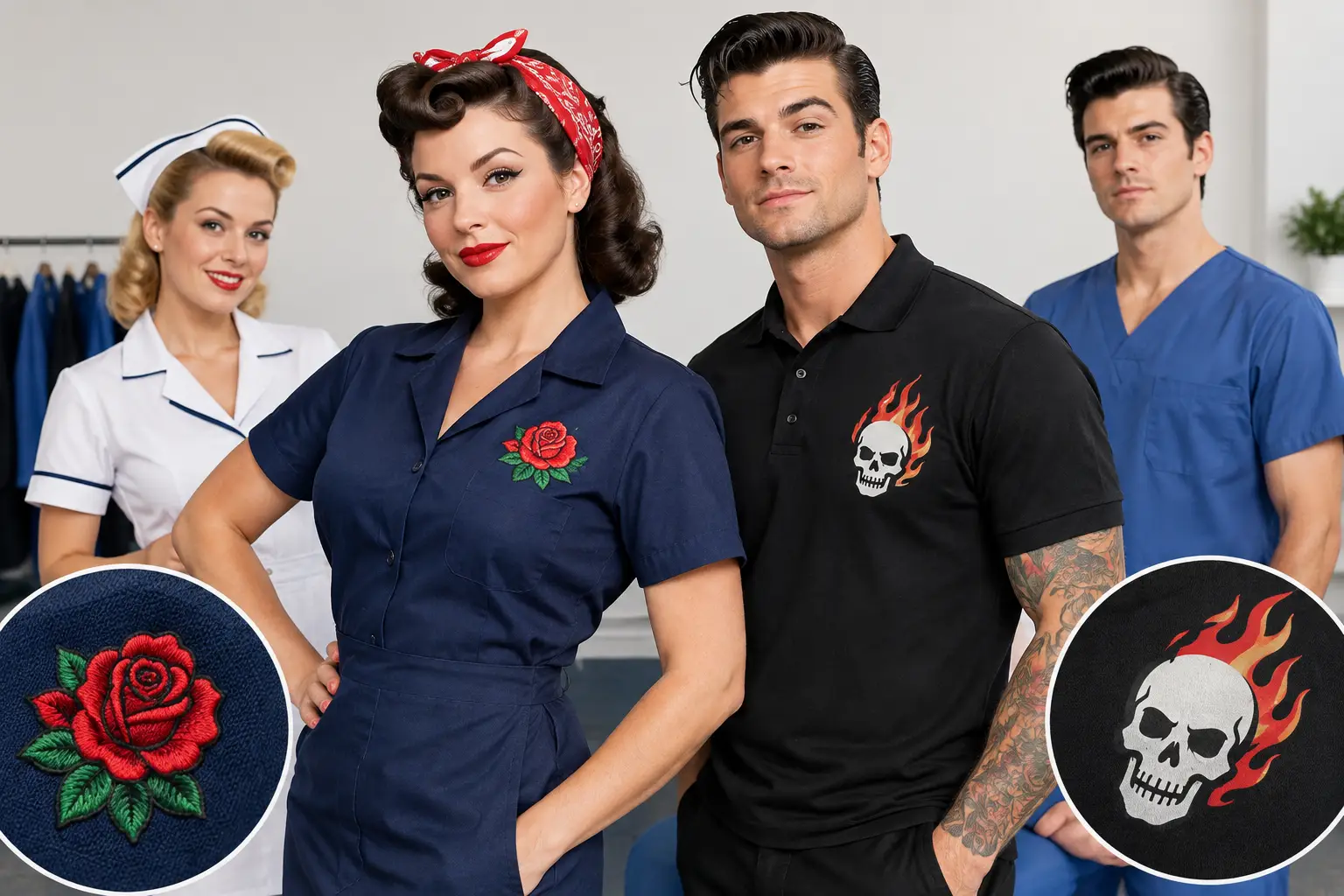
Compare embroidered versus printed uniforms for healthcare, trades, schools, and teams. Learn which finish best suits durability, detail, budget, and use.
A logo on a uniform does more than fill empty space. For a dental practice, it can make a patient feel they are in capable hands before the first introduction. For an EMS crew, barn team, or service company, it helps people identify the professional they need. The choice between embroidered versus printed uniforms affects that first impression, along with durability, comfort, cost, and how well the garment fits the job.
Neither method is automatically better. Embroidery brings texture, permanence, and a polished finish that works especially well on jackets, polos, vests, and structured workwear. Printing can deliver finer artwork, bigger coverage, and a lighter hand on tees and performance fabrics. The right answer starts with the garment's purpose, not a one-size-fits-all rule.
Embroidered Versus Printed Uniforms: The Core Difference
Custom embroidery creates the design with thread stitched directly into the garment. A name, credential, department title, or logo becomes part of the piece rather than a layer sitting on its surface. It has dimension, holds its shape, and reads as deliberate from across a reception area, job site, or stable aisle.
Printed uniforms apply ink, film, or another graphic treatment to the fabric. The exact process can vary, but the practical result is a flatter design with greater freedom for detailed illustration, gradients, large graphics, and multiple colors. A printed chest logo can be clean and professional. A full-back design can give a team tee the energy of something people will actually want to wear off shift.
The decision is less about “formal” versus “casual” than it is about use. A veterinary clinic may choose embroidered zip-up jackets for the front desk and printed event shirts for an adoption day. A plumbing company may embroider daily polos, then print high-visibility crew shirts for a summer project. Both choices can look cohesive when the branding is handled with discipline.
When Embroidery Is the Stronger Uniform Choice
Embroidery earns its place when the uniform needs to carry authority over time. It is particularly well suited to left-chest logos, names, professional credentials, and small department identifiers. The raised thread catches the light without being flashy, giving a polo or jacket a finished appearance that basic promotional apparel rarely achieves.
For healthcare and dental teams, that finish matters. A clean embroidered practice logo on a jacket or vest supports a calm, organized presentation. Adding a name and credential beneath it can make introductions easier for patients and reinforce the expertise already in the room. For trades, hospitality, education, and equestrian organizations, the same logic applies: a well-placed stitched mark signals that the team came prepared.
Embroidery also tends to perform well through regular wear and laundering when the garment and stitch work are selected appropriately. It will not crack or peel because there is no printed surface to break apart. That makes it a practical option for outerwear, work polos, fleece, canvas bags, and other pieces expected to stay in rotation.
There are limits. Dense embroidery can feel heavier on thin shirts, and a complex logo may need to be simplified so small details remain legible in thread. A tiny line of text, subtle color fade, or intricate illustration can lose clarity when reduced to a chest-sized embroidery area. More stitches also generally mean more production cost. Premium does not mean overbuilt - it means choosing a finish that serves the garment.
Best uses for custom embroidery
Embroidery is usually the right call for professional uniforms that need a refined, durable identity: practice jackets, quarter-zips, vests, polos, button-downs, fleece layers, caps, and bags. It is also the natural choice for individual names and credentials, where the detail is concise and the placement is small.
A navy soft-shell jacket with an embroidered clinic logo and the wearer’s name is a strong example. It looks credible at check-in, during a facility visit, and on the walk from the parking lot. The garment has a job to do, and the decoration supports it.
Where Printed Uniforms Have an Advantage
Printing is the better tool when your artwork depends on fine detail or when the design needs room to breathe. Photographic elements, soft gradients, thin linework, large back graphics, and playful illustrations are often more accurate in print than in thread. This is especially useful for branded tees, staff-event apparel, spirit wear, and designs intended to make someone smile after a long shift.
It can also be a comfortable choice for lightweight garments. A properly selected print has less bulk than a dense embroidered area, which matters on thin performance shirts or soft cotton tees. If your crew works outdoors in heat, a light printed shirt may be more practical than adding substantial stitching to every piece.
Printing often gives organizations more visual coverage for the budget. A large logo across the back or a bold safety message can be highly visible without the stitch count that comparable embroidery would require. That does not make it the budget option by default. It simply makes printing more efficient for certain artwork and placements.
Quality still matters. Low-grade prints can fade, crack, or feel stiff. The fabric, artwork, decoration method, and wash routine all influence the result. A strong printed uniform starts with a purpose-built garment and a design sized for the way people will actually see it. A small detailed logo printed too low on a shirt is still a missed opportunity, no matter how vibrant the colors are.
Best uses for printed apparel
Printed uniforms are a smart fit for staff tees, promotional event shirts, team-building apparel, seasonal campaigns, and larger graphics. They also make room for the boutique side of professional pride - the nurse-life tee, the medic joke that lands with the whole station, or the school spirit design that does not need to look like a corporate memo.
There is room for personality in workplace apparel. The key is assigning it to the right garment. Keep the patient-facing jacket polished. Let the unit picnic tee have a dash of humor.
Choose by Garment, Environment, and Brand Standard
Before selecting a decoration method, look at where and how the uniform will be worn. A logo that looks excellent on a structured polo may not translate to a thin moisture-wicking shirt. A design that works on a full-back tee may be too busy for a medical office vest. Brand consistency does not require identical decoration on every garment. It requires the same recognizable identity, applied with good judgment.
Consider laundering and replacement cycles as well. Teams with garments exposed to frequent washing, outdoor conditions, or physical work should prioritize materials and decoration built for that level of use. A front-office cardigan and a field-service work shirt can carry the same logo while requiring different solutions.
The number of people wearing the uniform matters, too. A small practice may value embroidered names on every jacket because each person is a visible part of the patient experience. A large event team may need printed shirts that are easy to distribute and easy to recognize from a distance. For mixed needs, a layered program often works best: embroidered core uniforms for day-to-day professionalism, printed apparel for events, outreach, and team culture.
Questions to Settle Before You Order
Start with the design itself. Is the logo simple enough to stitch clearly at a small size, or does it rely on tiny text and fine art? Next, consider placement. A left-chest mark, sleeve detail, and full-back graphic do not demand the same method.
Then think about the wearer. Is this a clinician meeting patients, a technician working outdoors, a trainer moving between barns, or a student volunteer at a fundraiser? Finally, define the standard you want to maintain. If the uniform is meant to communicate credentials, trust, and a long-term professional identity, embroidery is often worth the investment. If it is meant to carry a broad visual message or an expressive design, printing may deliver more of what the artwork needs.
At Corazón De Oro Apparel, the goal is not to force every logo into thread or put every idea into ink. It is to help professionals choose apparel that looks right for the work, wears well through real schedules, and represents their team with the pride it deserves.
The most useful question is simple: what should someone understand the moment they see this uniform? Choose the finish that makes that answer clear, then build the rest of the program around it.